Hyper-personalization is changing the way companies connect with their customers. It blends artificial intelligence with real-time data to deliver tailored experiences that truly matter. As a result, users feel seen, understood, and valued.
Traditional personalization groups people into segments. In contrast, hyper-personalization speaks to each individual. It adapts every touchpoint based on live behavior and intent.
In this article, you’ll discover what hyper-personalization really means, how it works, and why it’s critical for future-ready brands. You’ll also learn how to implement it quickly using tools like Aiployees—without writing a single line of code.
What Is Hyper-Personalization?
Hyper-personalization goes beyond basic targeting. It’s a method that uses live user data and AI to adjust content instantly. Unlike standard personalization, which relies on past behavior, hyper-personalization reacts to what the user is doing right now.
For example, instead of sending one newsletter to everyone who likes sports shoes, a hyper-personalized email highlights a specific model, in the user’s size, with colors they’ve browsed recently.
Because of this, users are more likely to engage—and convert.
How It Works: A Simple Breakdown
Hyper-personalization relies on technologies like machine learning, natural language processing, and real-time data analysis. Here’s how it functions step by step:
- Step 1 – Collect live data
This includes page views, time on site, chat questions, scroll depth, location, and past purchases. - Step 2 – Analyze and understand
AI interprets this data to detect patterns, identify user intent, and predict needs. - Step 3 – Personalize dynamically
The system updates product recommendations, headlines, emails, or pricing on the fly. - Step 4 – Deliver instantly
Everything happens in real time. That’s why Spotify creates playlists just for you, and YouTube shows content you’ll probably love.
As a result, users enjoy experiences that feel natural, helpful, and timely.
Real Example: Smarter Websites
Imagine a website that adapts to your needs while you’re browsing.
With Aiployees, this is already possible. Their AI platform personalizes web pages for each visitor automatically. While one user may see product demos and pricing, another might get case studies and live chat options.
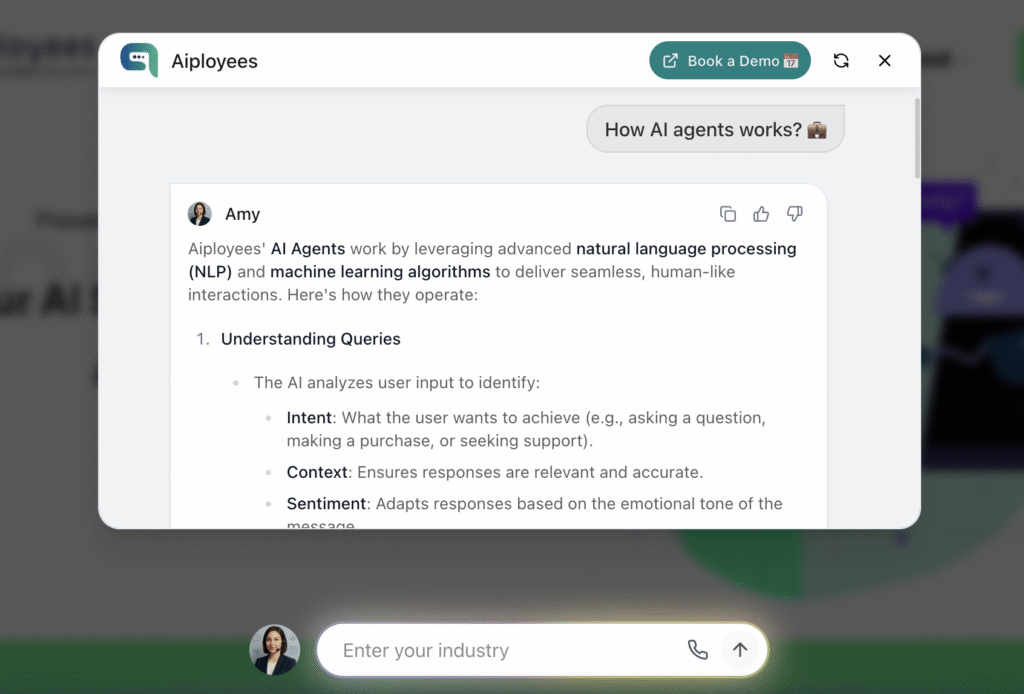
Because of this, visitors find what they need faster. They stay longer and convert more often.
Moreover, companies using this approach reduce bounce rates and shorten the decision-making process.
5 Ways Hyper-Personalization Helps You Win
Hyper-personalization isn’t just smart—it’s profitable. Here’s why:
- It grabs attention fast
Visitors see relevant content right away. This increases time on site and reduces friction. - It boosts conversions
Personalized CTAs, offers, and products lead to faster action. Users don’t have to think twice. - It increases order value
For example, if someone buys a laptop, the system may suggest a compatible mouse or software instantly. - It builds loyalty
When people feel understood, they trust your brand. Over time, they come back—and tell others. - It makes your brand memorable
While competitors stay generic, you deliver unforgettable experiences. That makes all the difference.
Challenges to Keep in Mind
Despite its strengths, hyper-personalization has a few challenges:
- Data privacy
Always protect user data and comply with GDPR and similar laws. Transparency builds trust. - Data accuracy
Incomplete or outdated data leads to wrong suggestions. That’s why clean data is essential. - Technical integration
Syncing your CRM, analytics, and website systems may take some effort. - Setup costs
Traditional setups are expensive. Thankfully, no-code tools like Aiployees make it affordable and fast.
Start Today—No Developers Needed
With Aiployees, you can personalize your site in just minutes. There’s no need for IT support.
Here’s what it can do:
- Show dynamic pages based on user behavior
- Answer questions via chat or voice
- Collect qualified leads
- Sync with your CRM
- Book meetings and send follow-ups
Because everything runs in real time, your site becomes a powerful engagement tool.
👉 Try it now at aiployees.com
Final Thoughts
People expect personal experiences. They want content that understands them. Hyper-personalization helps you deliver that—at scale.
Whether you’re in e-commerce, SaaS, or services, this approach will boost engagement, conversions, and brand loyalty.
For deeper insights into AI-driven personalization, read “Personalization Done Right” in Harvard Business Review, which explores how leading services like Spotify use real-time AI to boost engagement.
